

Dental Implant vs Bridge: Which is Right?
If you have a missing tooth, one of the biggest questions is whether to choose a dental implant or a dental bridge. Both options can restore your smile, improve chewing, and help you speak more comfortably. The right choice depends on your bone support, nearby teeth, budget, treatment time, and long-term goals.
At Alam Dental Care & Implant Center, patients often ask which option feels more natural, lasts longer, and protects oral health better over time. This guide explains the difference in simple language so you can understand which treatment may suit your situation better.
What Is the Main Difference Between an Implant and a Bridge?
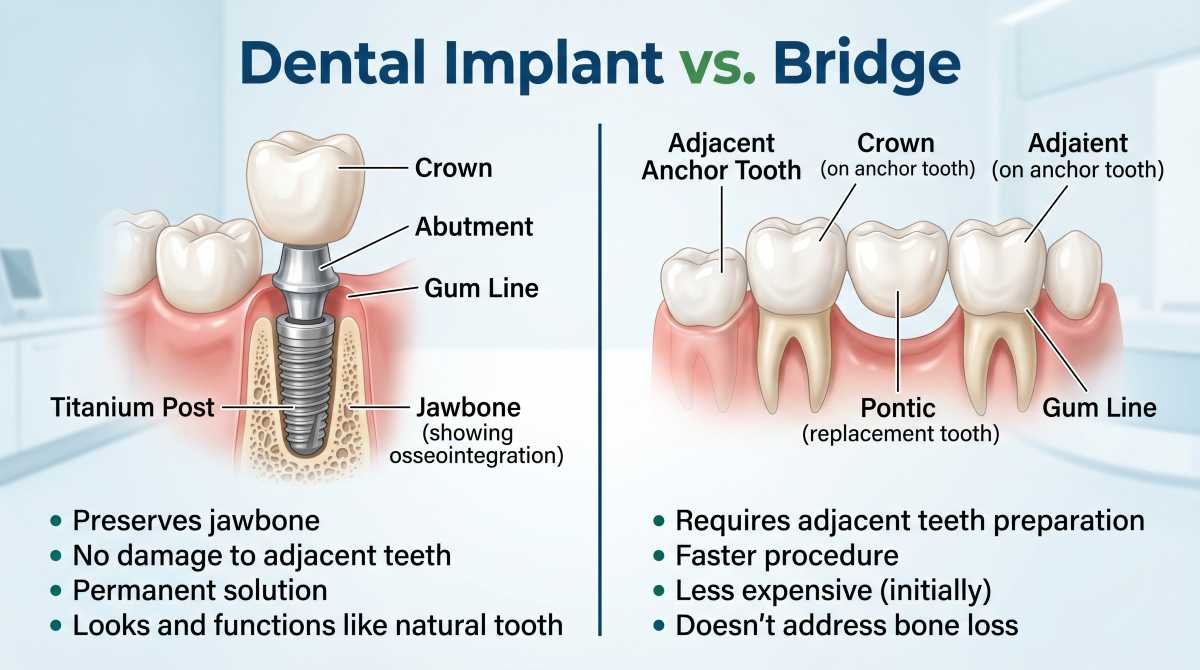
A dental implant replaces the missing tooth root with a metal post placed in the jawbone, and then a crown is attached on top. A dental bridge fills the gap by using the teeth next to the missing space as support. In simple terms, an implant stands on its own, while a bridge depends on neighboring teeth for support.
This difference matters because it affects treatment time, durability, cleaning, bone support, and whether healthy nearby teeth need to be reshaped.
Dental Implant vs Bridge: Side-by-Side Comparison
| Point | Dental Implant | Dental Bridge |
|---|---|---|
| Support | Supported by jawbone through an implant post | Supported by the teeth on either side of the gap |
| Treatment time | Usually longer because healing is needed | Usually faster than an implant |
| Surgery | Yes, usually involves a surgical stage | No implant surgery required |
| Effect on nearby teeth | Usually does not require grinding adjacent teeth | Often requires support teeth to be prepared |
| Bone preservation | Better for preserving bone in many cases | Does not replace the missing root inside bone |
| Cleaning | Feels closer to cleaning around a natural tooth | Needs extra care under the bridge area |
| Initial cost | Usually higher upfront | Usually lower upfront |
| Long-term view | Often preferred when long-term preservation matters | Can still be a very practical choice in suitable cases |
When a Dental Implant May Be the Better Choice
Implant may suit you if:
- You want a more independent replacement for one missing tooth.
- You want to avoid cutting healthy adjacent teeth.
- You have enough bone, or bone support can be built properly.
- You are ready for a longer treatment process.
- You want a more long-term replacement strategy.
Things to keep in mind:
- Implants usually take more time because healing is important.
- Some patients may need bone grafting before implant placement.
- There is usually a surgical phase.
- Upfront cost is commonly higher than a bridge.
Authoritative medical sources explain that implants can help preserve bone and often last longer than bridges, but they require healing time and careful case selection. You can read more here: Cleveland Clinic: Dental Implants and Mayo Clinic: Dental Implant Surgery.
When a Dental Bridge May Be the Better Choice
Bridge may suit you if:
- You want a quicker tooth replacement option.
- You want to avoid implant surgery.
- Your neighboring teeth already need crowns.
- Your budget is tighter in the short term.
- Your bone or medical condition makes implants less ideal.
Things to keep in mind:
- A bridge usually depends on support from adjacent teeth.
- Cleaning under the bridge needs special attention.
- It may not preserve bone in the same way an implant can.
- Long-term maintenance and replacement may be needed in some cases.
A bridge is not a “bad” option. In many real-life cases, it is the most practical solution because it is faster, avoids surgery, and restores function well. For many patients, especially when the support teeth already need treatment, a bridge can make very good sense. You can read an authoritative overview here: Cleveland Clinic: Dental Bridges.
Which Option Lasts Longer?
In general, implants are often considered the more durable long-term option when the case is suitable and maintenance is good. Bridges can also work very well, but they may need replacement earlier than implants in some patients. Longevity depends heavily on oral hygiene, bite forces, gum health, smoking habits, and regular dental follow-up.
So the better question is not only “Which lasts longer?” but also “Which is safer, smarter, and more realistic for my mouth right now?”
What About Cost and Treatment Time?
A bridge usually has a lower upfront cost and can often be completed faster than an implant. An implant usually costs more initially because it involves surgery, planning, healing, and final restoration. But many patients still choose implants because they want a more independent long-term replacement.
If your main concern is implant pricing in Jamshedpur, read this existing guide: Dental Implant Cost in Jamshedpur.
Cost should never be judged alone. The better comparison is: upfront affordability vs long-term dental value.
Which Feels More Natural?
Many patients say implants feel closer to natural teeth because the replacement stands independently and does not rely on neighboring teeth. But a well-made bridge can also feel comfortable and natural in daily life. The final comfort depends on fit, bite adjustment, gum health, and proper treatment planning.
Both options can improve chewing and appearance. The decision is not only about comfort but also about long-term support and maintenance.
Who Should Decide: You or the Dentist?
The final decision should be made together. You should absolutely share your preferences about cost, treatment speed, surgery, and long-term goals. But the dentist must evaluate bone level, gum health, bite pressure, missing-tooth location, and the condition of nearby teeth before giving the best recommendation.
If you want to know more about the experience and training behind implant treatment planning, visit About Dr. Shahbaz Alam.
Related Reading on Alam Dental Care
Frequently Asked Questions
Is a dental implant better than a bridge?
Which is cheaper, dental implant or bridge?
Does a bridge damage nearby teeth?
How long does a dental implant take compared with a bridge?
How do I know which option is right for me?
Need Help Choosing Between an Implant and a Bridge?
If you are missing a tooth and want a clear recommendation based on your mouth, bite, and budget, book a consultation at Alam Dental Care & Implant Center.
Call: +91 93865 38772
Book online: https://alamdentalcare.com/contact/